Augustus Tapınağı
At a glance
- Collection focus
- Roman temple of Augustus and Roma with the Res Gestae inscription
About Augustus Tapınağı
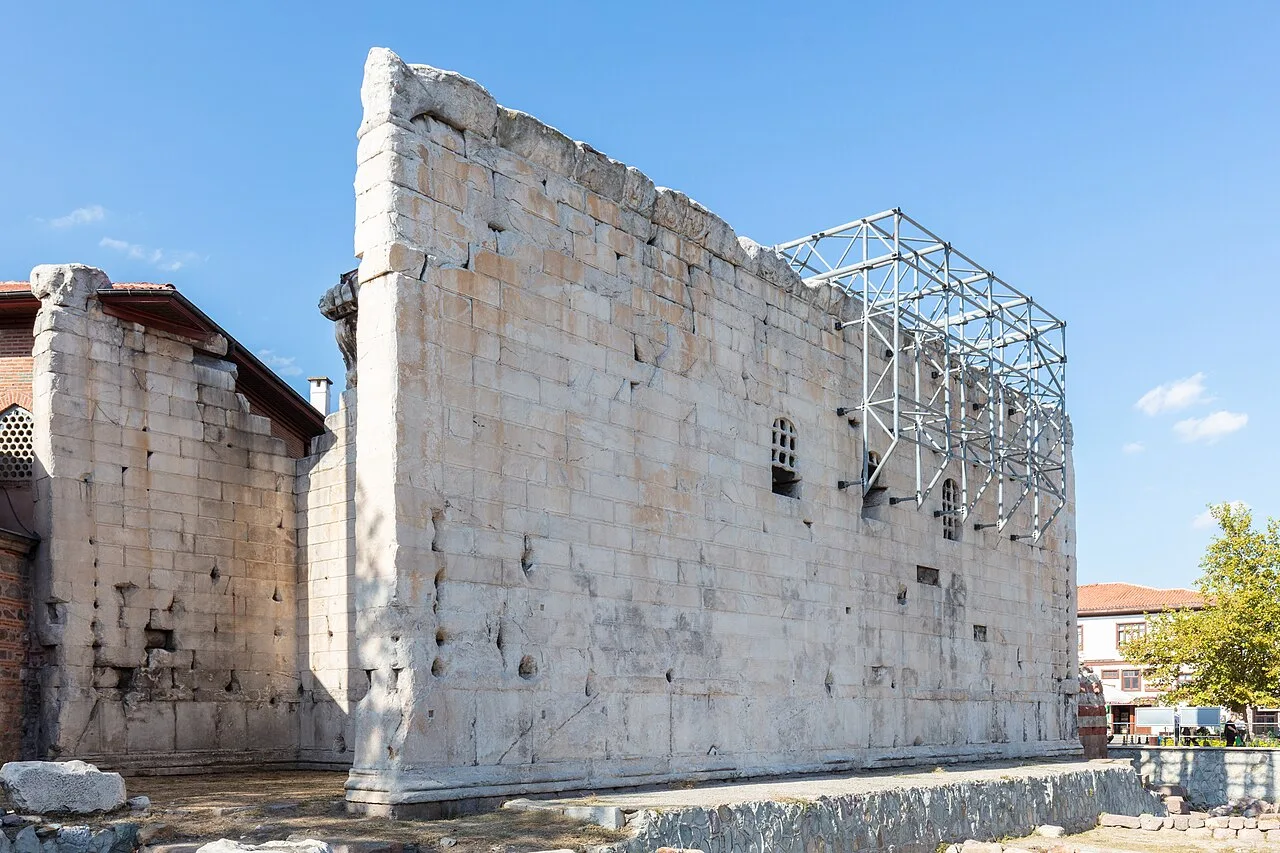
The Temple of Augustus and Rome (Augustus Tapınağı) is one of the most important Roman buildings in Ankara. It stands in the Hacı Bayram quarter of Ulus, joined at its north-west corner to the Hacı Bayram Mosque, on a hill that the Ministry of Culture and Tourism notes has served as a sacred site and place of worship for thousands of years. The temple was built in about 25-20 BC, after Galatia became a Roman province with Ancyra (Ankara) as its capital, and was dedicated to the emperor Augustus and the goddess Roma. According to the ministry, it was a Corinthian temple measuring 36 by 54.82 metres, raised on a podium of eight steps. In the early 6th century the Byzantines turned it into a church, adding an apse and opening three large windows, and after the mosque was built beside it in 1427-1428 it is thought to have served for a time as a madrasa. Much of one cella wall was destroyed in 1834, but the porch, the great doorway and the cella walls survive. The temple is famous for the Monumentum Ancyranum: after Augustus died in AD 14, the text of his Res Gestae (the Deeds of the Divine Augustus) was inscribed on its walls in Latin inside the porch, with a Greek translation on the outer wall of the cella. Because the bronze original in Rome is lost, this is the most complete surviving copy, and the historian Theodor Mommsen called it the Queen of Inscriptions. A visit combines naturally with the Hacı Bayram Mosque next door and the other sights of Ulus.
Images
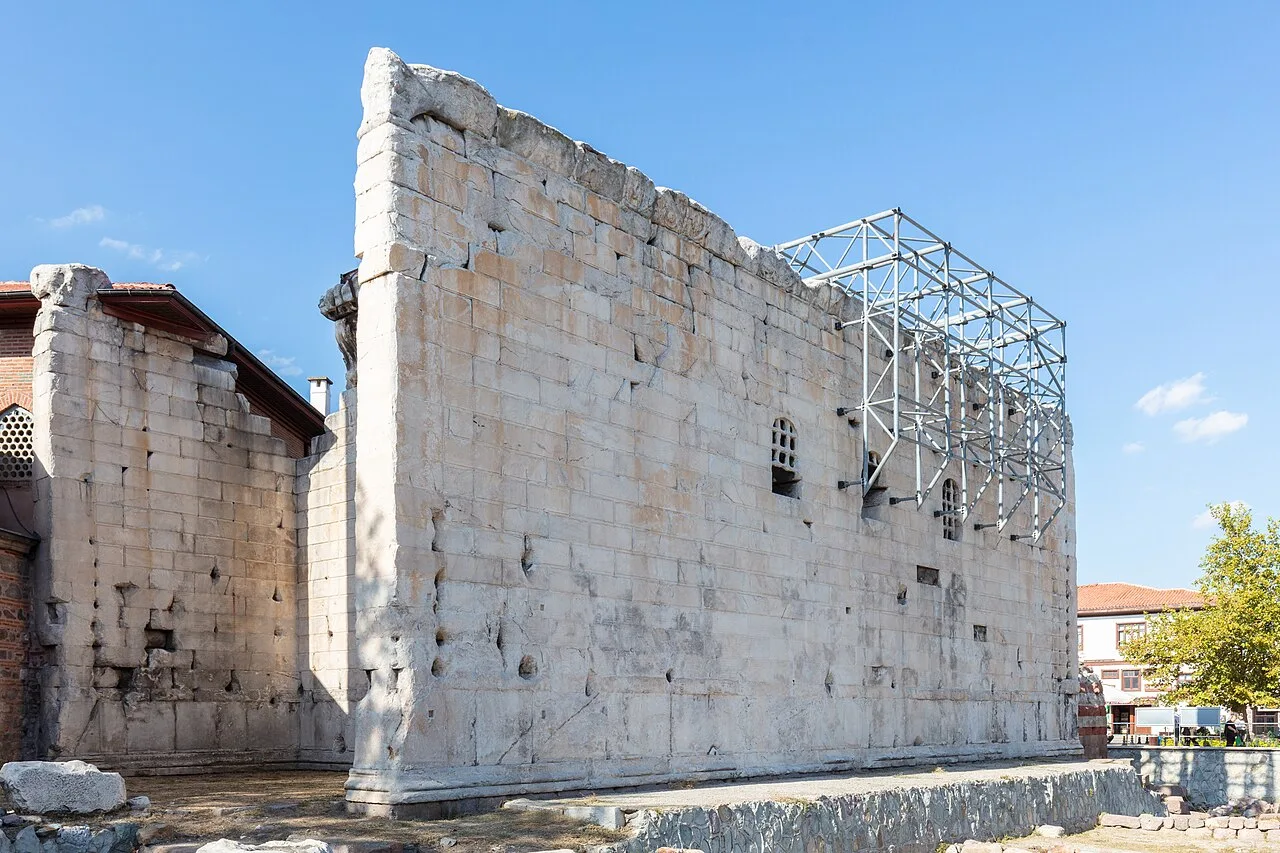
Image 1 of 1
Official sources
- Photo: Temple of Augustus 2014 - Kafkasmurat - CC BY-SA 4.0Checked 2026-11-10
- Photo: Temple exterior from SW 2014 - Dosseman - CC BY-SA 4.0Checked 2026-11-10
- Photo: Monumento de Ancira 2024 - Diego Delso - CC BY-SA 4.0Checked 2026-11-10
- Photo: Temple of Augustus and Rome - Bernard Gagnon - CC BY-SA 3.0Checked 2026-11-10
- Wikipedia (English) - Temple of Augustus and RomeChecked 2026-11-10
- Ministry of Culture and Tourism (muze.gov.tr) - Augustus Tapinagi leafletChecked 2026-11-10
- Wikipedia (Turkish) - Augustus TapinagiChecked 2026-11-10
Pass it on
Share this page
Send this Ankara guide to someone who will find it useful.